At Naples Airport, Mosquito Drones, Rooftop Solar and Panther Flights Share One Sustainability Plan
The airport authority's latest accounting pairs a 270-panel solar roof with a tenant's LiDAR mosquito mapping that cut treated acreage by nearly two-thirds — and a standing role in Florida panther research.
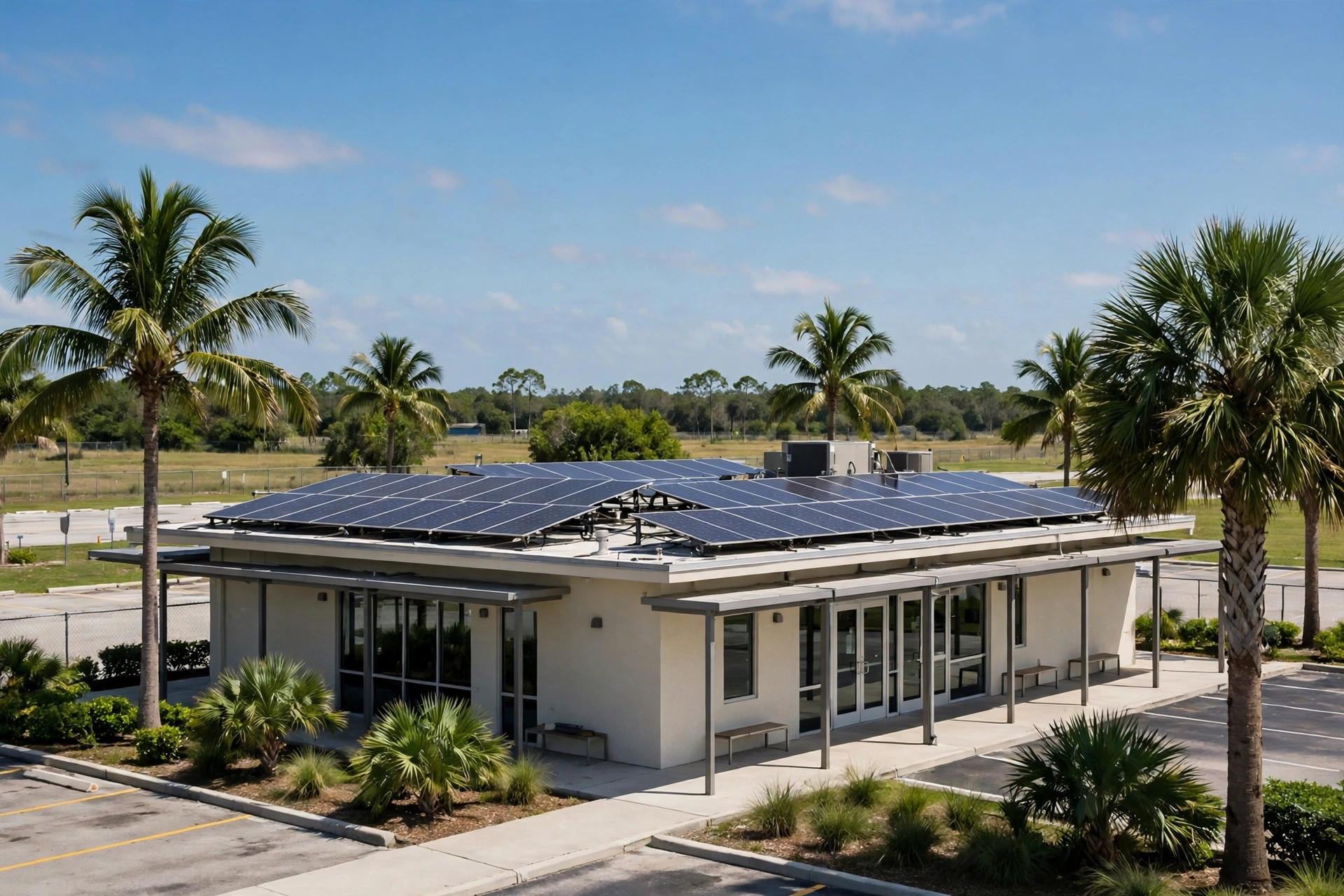
Naples Airport's sustainability push runs from its roof to its tenants' hangars. In an account published Sunday, airport authority executive director Chris Rozansky pointed to a new 270-panel rooftop solar project as the latest piece of a resilience program that also includes elevated airfield lighting and electrical systems, rapidly deployable Tiger Dam flood barriers and annual hurricane planning.
Some of the most striking numbers come from a tenant. The Collier Mosquito Control District, which operates from the airport, uses drone-mounted LiDAR to map the low-lying ground where floodwater mosquitoes develop instead of treating whole habitats. In 2026 the technology refined four treatment areas and cut the acreage needing treatment by nearly 63 percent; with repeat applications counted, the district estimates the change avoids more than 6,600 pounds of control material a year and saves about $101,000 in product costs. The airport also hosts Florida Fish and Wildlife Conservation Commission panther research, with tenant RexAir aircraft flying slow, low telemetry flights two or three times a week to locate radio-instrumented panthers.
The airport says it was the first on the East Coast to publicly offer a regular supply of sustainable aviation fuel, and it is converting ground vehicles and equipment to electric. The operation behind the effort is substantial: 125,926 takeoffs and landings in fiscal 2025 and an estimated $781 million in annual economic impact, alongside support for the 140-acre Gordon River Greenway next door.